
LeoLabs Radar Production Ramps After Bookings Exceed $100 Million
LeoLabs radar production is ramping up after the space surveillance company reported more than $100 million in bookings from US and allied customers, reflecting growing demand for systems designed to monitor activity in orbit and support national security missions.
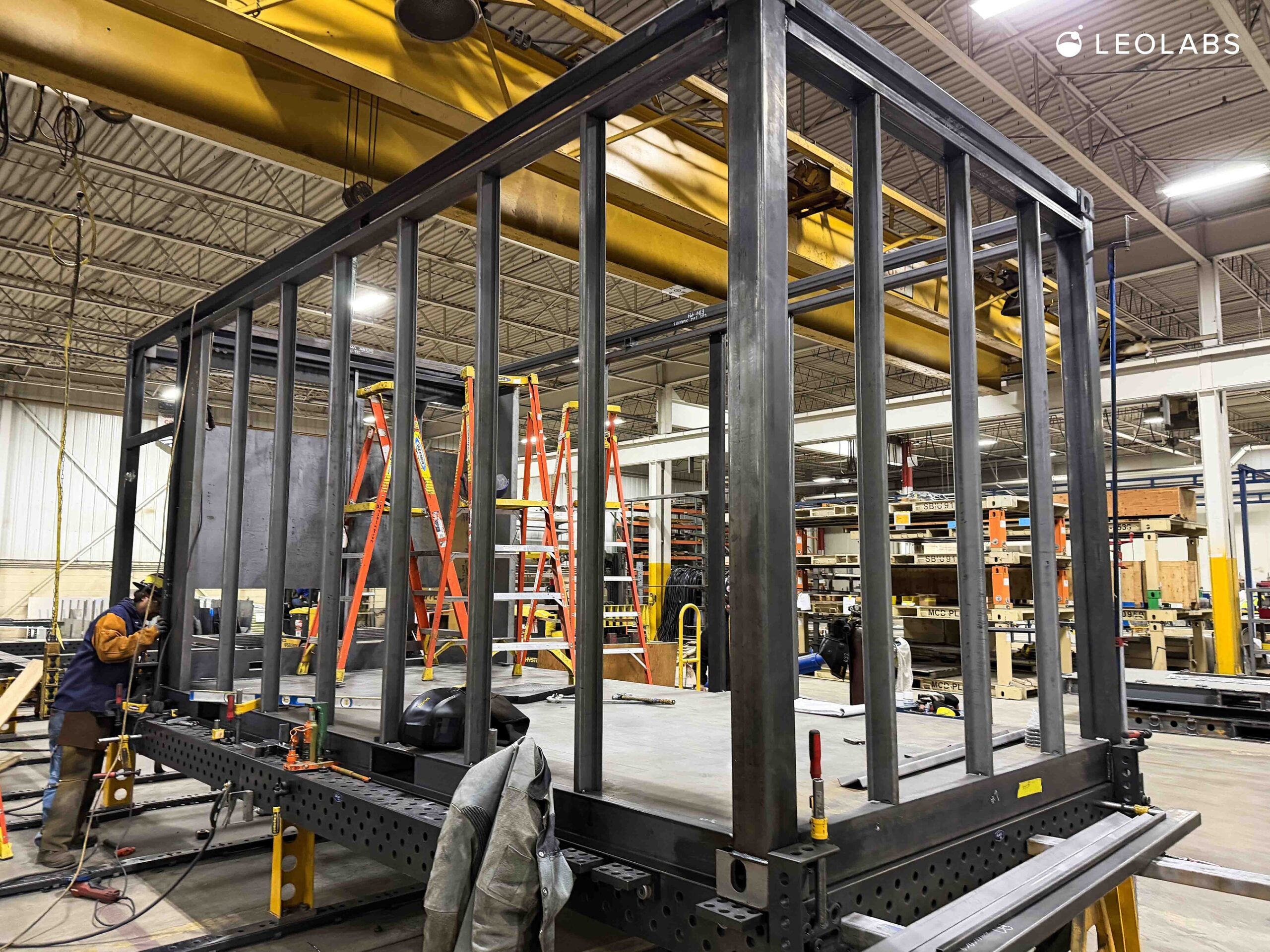
Announced on October 29, 2026, the milestone represents a doubling of the company’s bookings growth year over year, according to LeoLabs. The company is expanding its US manufacturing capacity as its next-generation Scout and Seeker radar systems move through production for deliveries scheduled in 2027.
The expansion is intended to help LeoLabs supply more radar systems, deploy them across additional locations and support both its own global radar network and government customers seeking sovereign sensing capabilities.
LeoLabs Radar Production Expands for 2027 Deliveries
LeoLabs says its Scout and Seeker radar systems are already moving through its US manufacturing line, with deliveries planned for 2027. The company is increasing its ability to build and field multiple radars concurrently rather than relying on a more limited production cadence.
To support the expansion, LeoLabs is drawing on an established domestic supply chain of contract manufacturers and component suppliers. This approach is intended to increase output while maintaining delivery timelines as demand grows.
The production ramp reflects a shift from developing and demonstrating advanced radar technology to delivering systems at greater scale. For government customers, the ability to field sensors on schedule can be important when expanding surveillance coverage or strengthening existing defence architectures.
LeoLabs has not disclosed a detailed breakdown of the more than $100 million in bookings by customer, contract or radar model. The announcement therefore indicates demand across its business without specifying how much of the total is attributable to individual programmes.
LeoLabs Radar Production Supports Scout and Seeker Systems
The Scout and Seeker families form part of LeoLabs’ next-generation radar architecture for space domain awareness, which involves detecting, tracking and understanding objects and activity in orbit.
Scout systems are designed to provide transportable radar capabilities that can be deployed where additional sensing coverage is required. The Scout-S, for example, is housed in a standard 20-foot shipping container, allowing it to be transported by land, sea or air and repositioned when operational needs change.
LeoLabs deployed its first operational Scout-S in the Indo-Pacific in 2026. The company says the system contributes observations to its global object catalogue and is intended to complement fixed radar installations with a more distributed sensing approach.
Seeker is another part of the company’s next-generation radar portfolio. Together, the systems are intended to help LeoLabs extend coverage and respond to demand for more persistent monitoring of activity in low Earth orbit.
The company is also developing radar capabilities for evolving defence requirements, including potential applications in missile warning and tracking. Specific capabilities depend on the radar configuration and the mission for which each system is deployed.
LeoLabs Radar Production Responds to Growing Space Security Needs
Space domain awareness has become increasingly important as governments and commercial operators depend on satellites for communications, navigation, Earth observation and national security.
Monitoring orbital activity requires more than identifying an object at a single point in time. Operators need reliable observations to determine where objects are travelling, detect changes in behaviour and assess potential risks to spacecraft or sensitive missions.
A distributed radar network can help extend observation opportunities across different geographic locations. Transportable systems offer an additional option when governments need to strengthen coverage in specific regions or adapt to changing operational priorities.
LeoLabs operates a global network of ground-based radars and provides orbital intelligence services to commercial and government customers. The company’s latest bookings announcement suggests that demand extends beyond its data services to physical radar infrastructure that customers can deploy for their own missions.
The company attributes the increase in demand to requirements from US and allied customers for additional sensors and faster delivery of capabilities. These are company-reported assessments rather than independently measured market-wide demand figures.
LeoLabs Radar Production Drives US Hiring and Manufacturing
LeoLabs plans to nearly double its employee base by the end of 2026 as it expands production and deployment capacity. Hiring is expected to cover radar and software engineering, manufacturing, systems integration and operations.
These roles are important for turning radar designs into operational systems. Manufacturing must be coordinated with component supply, while engineering and integration teams need to ensure that hardware, software and supporting systems function together at deployment sites.
Scaling production also creates operational challenges. Increasing output requires reliable suppliers, quality control, technical expertise and the ability to manage several systems through manufacturing and testing at the same time.
By building on its existing US supply chain, LeoLabs aims to expand capacity without starting its manufacturing network from scratch. The planned workforce increase reflects the technical and operational requirements of delivering more systems to customers.
The company has not disclosed the precise number of additional employees it intends to hire or the distribution of new roles across its operations.
LeoLabs Radar Production Builds on Earlier Contract Growth
The latest bookings milestone follows a period of growth in LeoLabs’ government business. In January 2026, the company reported more than $60 million in contract awards during 2025 across US, allied, civil, defence and commercial customers.
LeoLabs has also secured work connected to the US Space Force. In August 2026, it announced a $20.68 million prototype agreement to deliver a modified Scout system for a defence test capability.
These developments provide context for the company’s manufacturing expansion, although the earlier contract awards and the latest bookings figure represent different reporting periods and measures.
Bookings indicate business committed to the company but do not necessarily translate into revenue immediately. Delivery schedules, contract terms and the completion of customer requirements determine when that business is recognised financially.
For LeoLabs, the immediate priority is converting demand into operational radar systems. With Scout and Seeker units moving through production and 2027 deliveries planned, the company’s ability to scale manufacturing and deployment will be central to its next stage of growth.