
Virtual Reality Pilot Training Expands to South Asia With New H125 Simulator Hub
The adoption of Virtual Reality Pilot Training is accelerating across the aviation industry as airlines, helicopter operators and flight schools embrace immersive technologies to improve safety, reduce costs and increase access to high-quality pilot instruction. By combining realistic simulation with motion platforms and virtual reality, next-generation training systems are helping pilots practise critical scenarios without the risks and expenses associated with live aircraft operations. Recent advances have also enabled regulatory authorities to certify VR simulators for professional flight training.
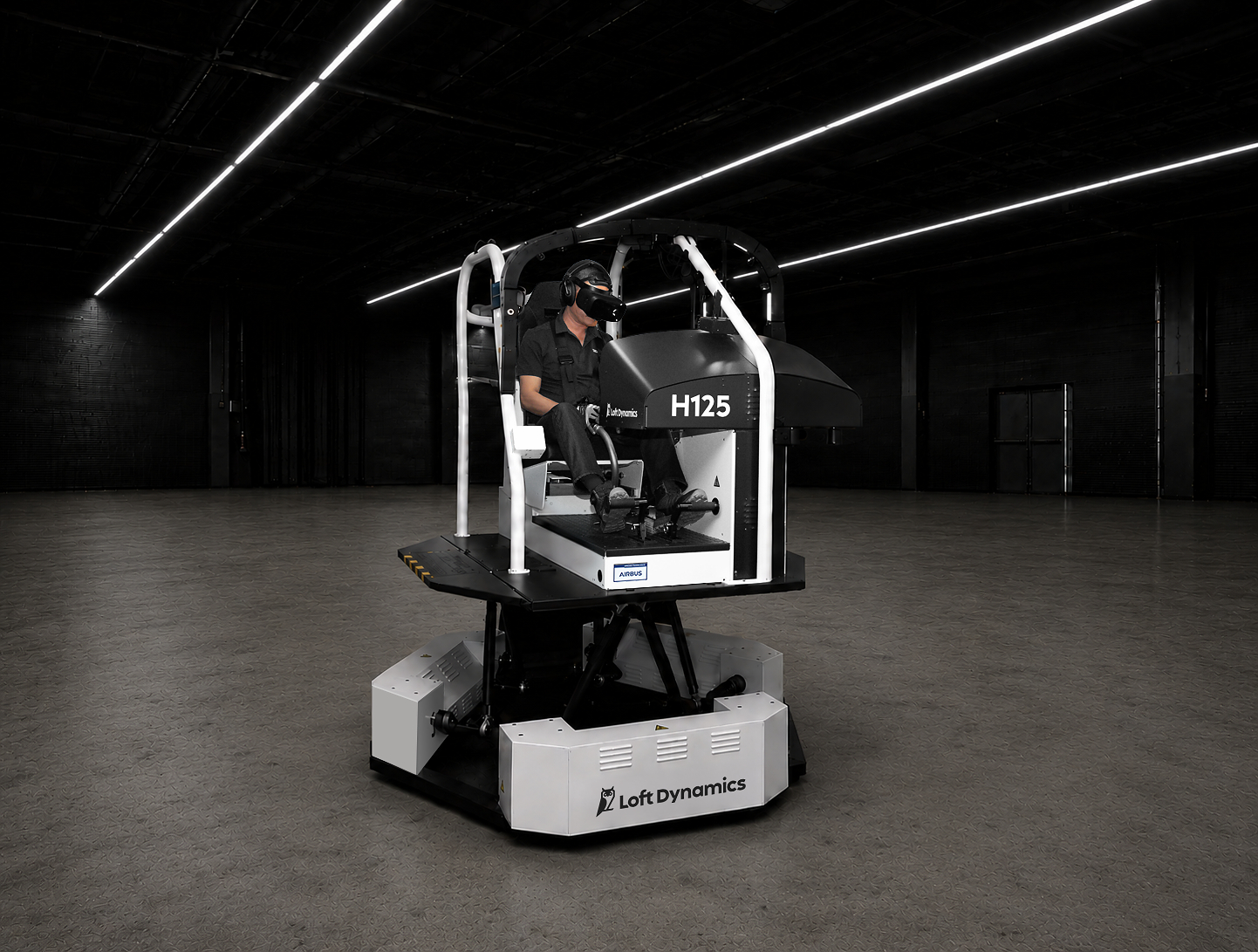
Loft Dynamics has announced its expansion into South Asia through a partnership with Indocopters Private Limited, which will install India’s first Airbus H125 TXi VR full-motion simulator. The installation will establish South Asia’s first dedicated H125 virtual reality training centre, significantly expanding helicopter pilot training capacity across India and neighbouring countries including Nepal, Bhutan, Bangladesh, Sri Lanka and the Maldives. The simulator is designed to provide realistic training for emergency procedures, adverse weather, confined-area landings and mountain flying while reducing dependence on aircraft availability.
The partnership comes as India’s helicopter ecosystem continues to grow, supported by new manufacturing investments and increasing demand for aviation services across emergency medical operations, disaster response, tourism, infrastructure and executive transport.
Virtual Reality Pilot Training Improves Safety and Readiness
One of the biggest advantages of Virtual Reality Pilot Training is the ability to safely practise high-risk flight situations that would be difficult or dangerous to recreate in real aircraft.
The H125 simulator enables pilots to repeatedly train for engine failures, emergency landings, poor weather conditions and challenging mountain operations inside a fully immersive virtual environment. Repetitive training helps reduce the “startle effect,” allowing pilots to respond more effectively during real emergencies while improving operational confidence and decision-making.
Industry experts consider simulator-based training an important complement to live flight instruction because it enables pilots to gain experience without exposing aircraft or crew to unnecessary risk.
Virtual Reality Pilot Training Supports India’s Growing Helicopter Fleet
The expansion of Virtual Reality Pilot Training comes at a time when India’s helicopter industry is preparing for significant growth.
Airbus Helicopters and Tata Advanced Systems are establishing the country’s first private-sector helicopter final assembly line for the Airbus H125 in Karnataka. With more H125 helicopters expected to enter service across South Asia, demand for scalable pilot training infrastructure is also expected to increase. More than 80 H125 helicopters are already operating across the region, supporting diverse missions ranging from medical evacuation and disaster relief to utility operations and executive transport.
Industry observers believe modern simulation technology will play a critical role in supporting this expanding fleet.
Virtual Reality Pilot Training Makes Advanced Simulation More Accessible
A key benefit of Virtual Reality Pilot Training is accessibility.
Unlike traditional full-flight simulators, VR-based systems require significantly less physical space while delivering highly immersive experiences through full-scale cockpit replicas, motion platforms and 360-degree virtual environments. This allows operators to deploy advanced pilot training closer to where pilots actually work, reducing travel costs and increasing training availability.
Loft Dynamics’ simulators have already received regulatory recognition from agencies including the FAA, EASA and Japan Civil Aviation Bureau, demonstrating growing confidence in virtual reality as a professional aviation training platform.
Virtual Reality Pilot Training Reflects Aviation Technology Evolution
The growing adoption of Virtual Reality Pilot Training illustrates how digital technologies are transforming aviation education.
Flight simulation increasingly combines artificial intelligence, cloud-based software, real-time performance analytics and immersive virtual environments to create more personalised and efficient training programmes. These technologies help instructors evaluate pilot performance while enabling trainees to repeat complex procedures until they achieve proficiency.
As aviation organisations seek safer, more scalable and cost-effective training solutions, virtual reality is becoming an integral part of modern pilot development strategies.
Virtual Reality Pilot Training Signals the Future of Aviation Learning
The launch of South Asia’s first dedicated H125 VR training centre demonstrates the growing importance of Virtual Reality Pilot Training within the global aviation industry.
By bringing advanced simulation technology to India, Loft Dynamics and Indocopters are helping expand access to world-class helicopter training while supporting the region’s rapidly growing aviation ecosystem. As helicopter fleets continue expanding across South Asia, immersive simulation is expected to become an increasingly important tool for improving pilot readiness, operational safety and training efficiency.