
Switching to an EV Makes Financial Sense When Annual Mileage Adds Up
Switching from a petrol SUV to an electric vehicle can reduce everyday running costs, but the financial benefit depends on how far a car travels, where it is charged and how long the owner keeps it. For Indian motorists considering an electric SUV, the key question is not simply whether electricity is cheaper than petrol, but how quickly those savings can offset the higher upfront purchase price.
A recent ownership-cost analysis published by VinFast examines this calculation using illustrative fuel prices, electricity tariffs, vehicle efficiency and maintenance costs. Its central finding is that drivers who cover more kilometres each year and charge primarily at home can recover the additional cost of an electric vehicle considerably sooner than occasional drivers.
The calculation is relevant as electric vehicles become a more established option in India’s passenger-car market. However, there is no universal mileage threshold at which every petrol-car owner should switch. The result depends on the actual vehicles being compared and the owner’s circumstances.
Switching to an EV Starts With the Cost Per Kilometre
The first step is comparing how much it costs to travel one kilometre in a petrol vehicle against an electric alternative.
Consider an illustrative petrol SUV priced around ₹102 per litre for fuel, delivering 13–14 kilometres per litre. Its fuel cost works out to approximately ₹7.30–₹7.85 per kilometre.
For an EV travelling around 6–7 kilometres per kilowatt-hour, home electricity rates and charging efficiency determine the cost of driving. Using a practical estimate of ₹0.90–₹1.30 per kilometre for home charging, the electric vehicle could save roughly ₹6 per kilometre compared with the petrol SUV.
These are illustrative calculations, not guaranteed costs for every vehicle or household. Electricity tariffs vary by state and consumption slab, while real-world efficiency changes with driving style, traffic, weather and air-conditioning use. Charging losses also affect the amount of electricity drawn from the grid.
Even with those variables, the running-cost difference can be substantial for drivers who cover long distances regularly.
Switching to an EV Can Recover the Upfront Price Difference
The next step is to calculate how many kilometres are needed to recover the EV’s additional purchase cost.
Suppose the electric SUV costs ₹4 lakh more than a comparable petrol model. If it saves ₹6 per kilometre in running costs, the break-even distance is approximately 66,700 kilometres.
The time required to reach that point changes with annual driving distance.
- 8,000 km per year: approximately 8.3 years
- 12,000 km per year: approximately 5.6 years
- 15,000 km per year: approximately 4.4 years
- 20,000 km per year: approximately 3.3 years
These figures consider fuel or energy savings alone. They exclude financing costs, depreciation, insurance differences, taxes, maintenance savings and potential resale-value differences.
The calculation also assumes that the ₹6-per-kilometre advantage remains broadly consistent. Actual savings can change over the ownership period as petrol prices, electricity tariffs and vehicle efficiency change.
The takeaway is straightforward: higher annual mileage gives an EV more opportunities to recover its initial price premium, particularly when the owner plans to keep the vehicle for several years.
Switching to an EV Depends on Where You Charge
Charging access can significantly affect the financial case.
Home charging is often the most economical option for owners who have suitable parking and electrical infrastructure. Public charging can cost considerably more per unit of electricity, narrowing the difference between petrol and electric running costs.
For example, using an illustrative public charging rate of ₹15–₹25 per kWh and efficiency of 6–7 kilometres per kWh, the energy cost could range from approximately ₹2.15 to ₹4.20 per kilometre before charging losses. That remains below the illustrative petrol cost of ₹7.30–₹7.85 per kilometre, but the savings are smaller than with inexpensive home charging.
For apartment residents without dedicated charging, the availability of nearby chargers, parking arrangements and charging time become important considerations alongside price.
Drivers who depend entirely on public charging should calculate costs using the rates at stations they expect to use regularly. A model that appears economical using household electricity tariffs may deliver a different result when most charging takes place at commercial stations.
Switching to an EV Can Reduce Maintenance Costs
Maintenance is another factor in the ownership calculation. Electric powertrains have fewer moving parts than conventional internal-combustion engines and do not require engine oil changes. This can reduce some routine servicing requirements.
VinFast’s analysis uses illustrative annual scheduled-service costs of ₹7,000–₹10,000 for petrol or diesel cars and ₹2,000–₹4,000 for comparable EVs. On those assumptions, the potential difference is approximately ₹5,000–₹8,000 per year.
However, maintenance savings should not be treated as guaranteed. Actual bills depend on the model, service schedule, driving conditions and repair requirements. EV owners may also face higher insurance premiums, tyre wear and expenses associated with charging equipment or other components.
Battery warranties and the availability of authorised service centres also matter. Buyers should review the warranty conditions carefully, including the coverage period, mileage limits and exclusions, rather than assuming that every battery-related repair will be covered.
When maintenance savings are included alongside energy costs, the break-even point may arrive earlier. A realistic comparison should use estimates for the specific petrol and electric vehicles being considered.
Switching to an EV Becomes More Attractive With Incentives
Purchase incentives and taxes can narrow the initial price difference before running-cost savings are even considered.
Some Indian states offer road-tax exemptions or other concessions for eligible electric vehicles. The value varies by state, vehicle price and prevailing rules. Buyers should check the applicable benefits at the time of purchase rather than assume that a national incentive applies everywhere.
Manufacturer offers can also influence the economics. VinFast, for example, says its India programme includes free charging through March 31, 2029, at participating V-Green charging stations. The company has also promoted maintenance benefits and support for customers transitioning from internal-combustion vehicles to EVs.
Such benefits can lower the effective cost of ownership, but their value depends on eligibility, the terms of the offer, where charging is available and how much a buyer would otherwise spend.
A useful comparison should calculate the net upfront price after applicable incentives, then estimate energy, maintenance, insurance, taxes and resale value across the intended ownership period. Manufacturer promotions should be checked against current official terms before they are included in a purchase decision.
Switching to an EV Requires a Total Ownership Cost Comparison
Running costs alone do not determine whether an electric vehicle is the better financial choice. The complete calculation should include the purchase price, financing, charging access, insurance, servicing, applicable taxes and expected resale value.
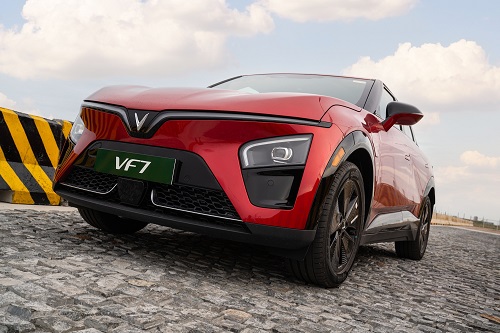
For buyers evaluating electric SUVs such as VinFast’s VF 6 and VF 7, the company lists claimed ranges of up to 468 km and 438 km respectively under the MIDC test cycle. These figures provide a reference for comparing models, but actual driving range depends on conditions and usage.
Warranty coverage and charging access can also influence ownership confidence. Still, buyers should compare the actual transaction price and specifications of the EV with those of a similarly equipped petrol or diesel vehicle, rather than comparing headline prices alone.
Switching to an EV is more likely to make financial sense when annual mileage is high, home charging is available, the upfront price gap is manageable and the vehicle will be retained long enough to realise the savings.
For low-mileage drivers or those without convenient charging, the break-even period may be much longer. The most reliable answer comes from calculating the costs for an individual driving pattern, rather than relying on a single mileage rule for every buyer.