NUS Business School AI Leadership Simulation Trains Executives to Make Better Decisions
The NUS Business School AI Leadership Simulation is bringing artificial intelligence into management education to help future and current leaders sharpen their judgement, ask better questions and make decisions when information is incomplete. Developed with the National University of Singapore’s AI Centre for Educational Technologies (AICET), the approach places MBA and Executive MBA students in simulated business situations where they must investigate problems rather than simply analyse a prepared case study.
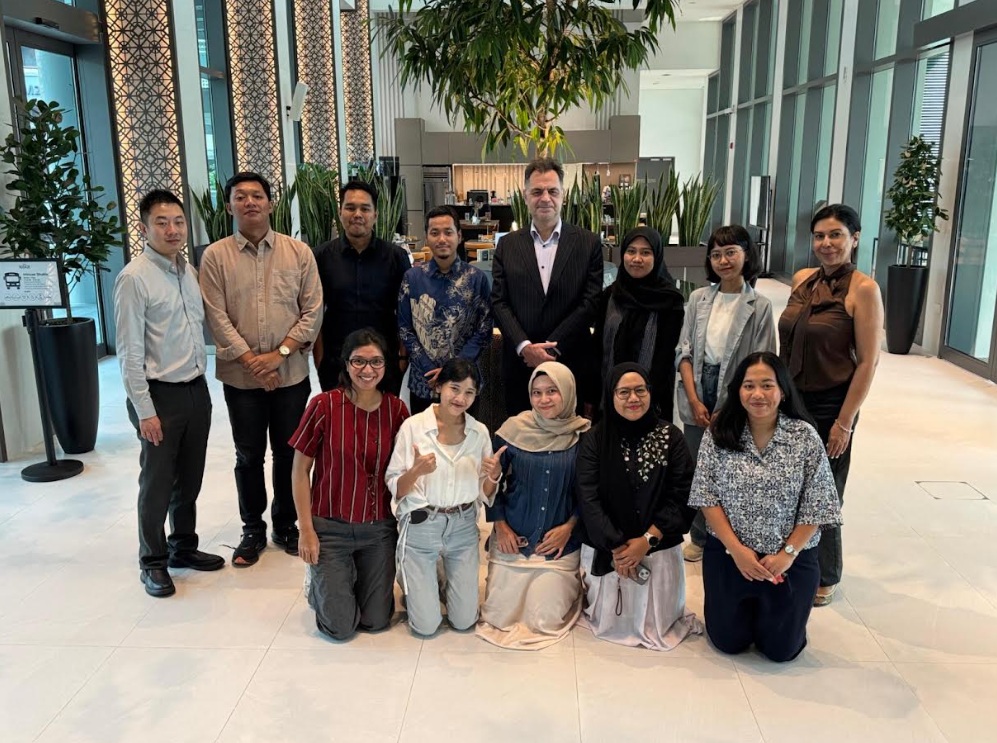
The initiative, piloted since January 2026, uses ScholAIstic, NUS’s generative AI platform for role-playing and simulation-based learning. Close to 100 MBA and Executive MBA students across Singapore and Jakarta have used the tool, including participants who are already senior executives.
The approach reflects a changing view of AI in business education. As AI systems become more capable of producing answers and summarising information, management schools are exploring how the technology can help people develop the judgement needed to evaluate information, challenge assumptions and decide what to ask next.
NUS Business School AI Leadership Simulation Changes the Traditional Case Study
Traditional business-school case studies give students a defined set of information about a business challenge and ask them to recommend a course of action. While this method develops analytical skills, real-world leadership often requires executives to identify missing information and seek answers from people with different perspectives.
The NUS Business School AI Leadership Simulation introduces that uncertainty directly into the learning process. Students receive a business problem and must decide what they need to know, whom to approach and how to evaluate the information they obtain.
Instead of relying entirely on a written case, participants interact with AI-simulated executives and build their understanding through questioning. This makes information gathering part of the exercise, rather than a step completed before the student begins analysing the problem.
The format is intended to bring management education closer to the conditions executives face in organisations, where information is often incomplete and stakeholders may disagree about priorities or the best way forward.
NUS Business School AI Leadership Simulation Uses AI Executives
The simulation places students in conversations with AI-generated versions of three senior corporate roles: a chief executive officer, a chief financial officer and a chief product and technology officer.
Each simulated executive provides a different perspective on the same business situation. Students must navigate those viewpoints, ask follow-up questions and reconcile the information before making a recommendation.
The exercise is designed to reward the quality of questioning rather than the number of questions asked. A student who simply works through a prepared list may miss important details, while someone who adapts their questions as new information emerges may uncover more useful insights.
After each interview, students receive personalised feedback on their questioning approach. They can reflect on how they gathered information and adjust their strategy in subsequent conversations.
This feedback loop allows learners to practise, review their performance and try different approaches in a controlled environment before applying similar skills in professional settings.
NUS Business School AI Leadership Simulation Develops Human Judgement
Dr Emir Hrnjić, Senior Lecturer in Finance at NUS Business School, has worked with AICET to adapt the platform for management education and develop the simulated executive personas.
The central objective is not to let AI make the business decision for the student. Instead, the system creates a situation in which students must determine what information matters, assess the credibility and relevance of responses, challenge what they hear and make a recommendation despite uncertainty.
Early analysis of interview transcripts suggests that stronger interviews involve more targeted questions, useful follow-ups and adjustments as new information becomes available. Simply asking more questions does not necessarily lead to better understanding.
These observations point to a practical leadership skill that can become more important as AI adoption expands: knowing how to interrogate information rather than accepting a plausible answer at face value.
The simulation also highlights the limits of AI-generated information. Students still need to evaluate responses critically and take responsibility for their conclusions, even when the information-gathering process is supported by AI.
NUS Business School AI Leadership Simulation Runs on ScholAIstic
ScholAIstic was developed by NUS’s AI Centre for Educational Technologies to support role-playing exercises, simulations and structured learning interactions. The platform allows educators to design AI personas, define learning objectives and provide feedback based on student interactions.
For the business-school simulation, the platform enables students to engage with different executive perspectives in a repeatable environment. Educators can use the interactions to help learners reflect on how they approach questions and respond to competing information.
The technology is part of NUS’s wider effort to use generative AI to enhance experiential learning across disciplines. Similar simulations can help students practise difficult conversations and decision-making scenarios that may be difficult to recreate consistently through conventional classroom methods.
By giving students opportunities to practise and receive feedback, ScholAIstic is intended to extend the learning experience beyond reading material or listening to lectures. The educational value, however, depends on how carefully scenarios are designed and how effectively educators connect the simulation to learning objectives.
NUS Business School AI Leadership Simulation Could Expand Across Management Education
NUS Business School sees potential for AI-simulated scenarios in other areas of management education where students need to question stakeholders, negotiate competing interests and make decisions with incomplete information.
Such exercises could help learners prepare for situations involving investment decisions, organisational change, product strategy and financial analysis. Students could practise gathering evidence from different stakeholders before making recommendations, then review their approach and identify gaps in their reasoning.
The model also offers a way to provide repeated practice without needing every scenario to be conducted through live role-playing with multiple human participants. However, AI simulations are not a replacement for real-world leadership experience, peer discussion or direct feedback from experienced educators.
Their strongest role may be as an additional training environment in which learners can develop and refine skills before applying them in more complex professional situations.
NUS Business School AI Leadership Simulation Reflects the Future of AI Education
The initiative illustrates a shift from using AI primarily as an answer-generation tool towards using it as a way to practise human skills. In leadership education, the relevant capabilities include critical thinking, communication, information evaluation and decision-making under uncertainty.
As businesses adopt AI across their operations, leaders will increasingly need to judge when to trust machine-generated insights, when to seek additional evidence and how to reconcile conflicting information. Developing these capabilities requires more than knowing how to use AI tools; it requires the discipline to question their outputs and make independent decisions.
The NUS Business School AI Leadership Simulation offers one model for practising those skills through interactive scenarios and personalised feedback. Its longer-term impact will depend on how the programme evolves, how student performance is evaluated and whether the skills developed through simulations translate into stronger decision-making in the workplace.