AGIBOT Worken Metric Aims to Measure Real-World Robot Productivity
AGIBOT has introduced the Worken metric, a new approach to measuring how much useful work robots perform autonomously, as the humanoid robotics company seeks to move the industry beyond manufacturing milestones and technology demonstrations towards measurable productivity.
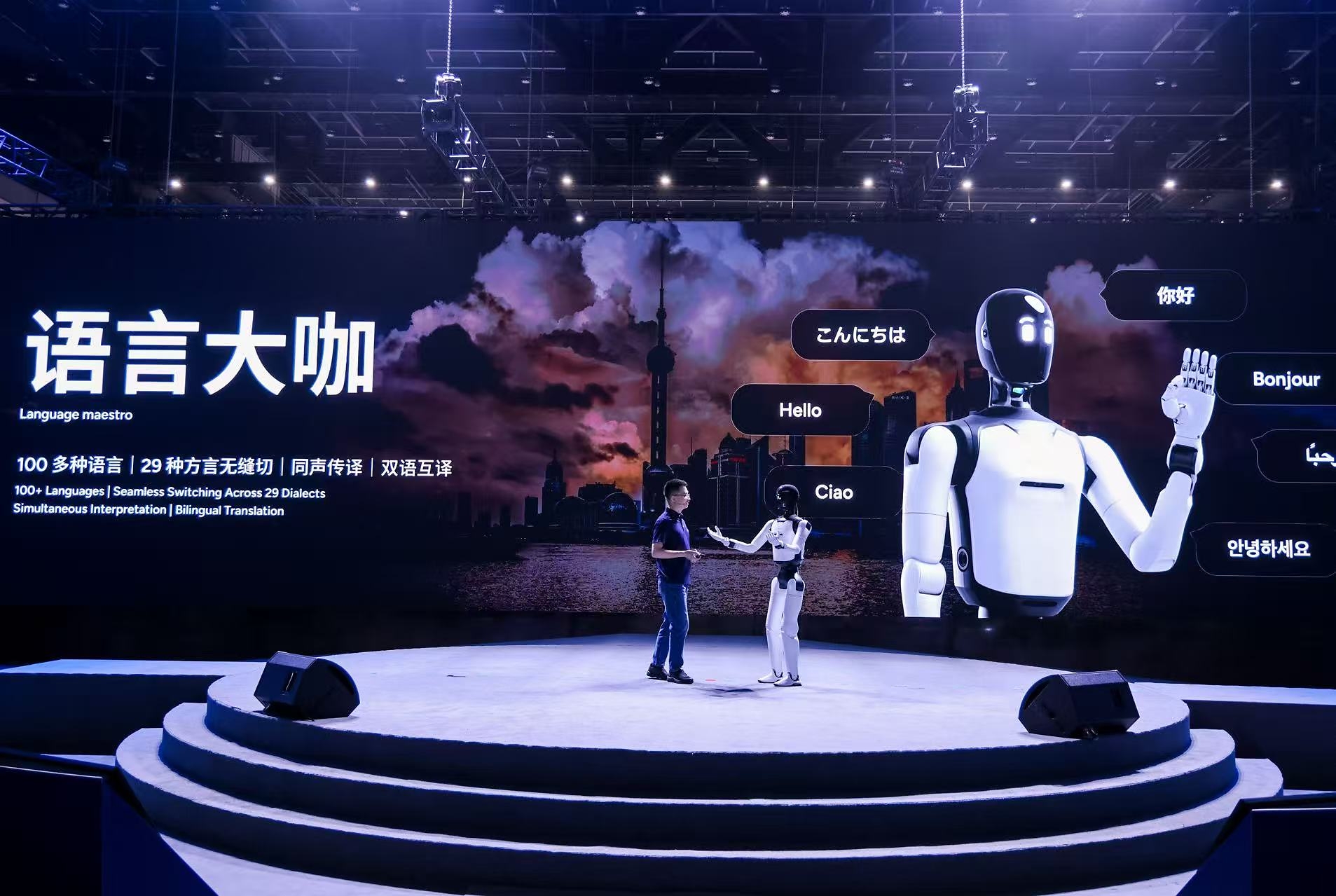
Unveiled at AGIBOT Innovation Day 2026 in Shanghai on 29 October, Worken is described as a measure of effective intelligent working hours. It considers the number of active robots, their autonomous working hours and their output efficiency to estimate productive work in real-world environments.
The concept addresses a growing question in the robotics industry: as humanoid robots become more capable and increasingly enter workplaces, how should businesses measure their actual contribution?
AGIBOT’s proposal shifts the emphasis from how many robots a company produces to how consistently those machines can operate independently and deliver useful results.
AGIBOT Worken Metric Focuses on Productive Robot Hours
The AGIBOT Worken metric is intended to provide a common way to assess the productive output of embodied AI systems. Embodied AI refers to artificial intelligence operating through physical systems, such as robots, that perceive and interact with the real world.
The company describes Worken as a measure built around three factors: the number of active robots, their autonomous working hours and an output-efficiency ratio.
The distinction matters because a robot being manufactured, shipped or installed does not automatically mean it is generating useful work. A machine may spend substantial time charging, waiting for instructions, requiring human intervention or recovering from errors.
By incorporating autonomous operating time and output efficiency, Worken aims to account for how effectively deployed robots perform tasks rather than simply counting hardware units.
AGIBOT’s approach is a proposed industry metric. Its usefulness will depend on how the company defines productive output, measures autonomy and accounts for differences between tasks and working environments.
AGIBOT Worken Metric Shifts Attention From Robot Shipments
Robot shipment figures and production volumes provide useful information about manufacturing capacity and commercial adoption. However, they reveal less about how much work robots actually complete once deployed.
For example, two facilities could each operate the same number of robots but achieve very different results. One group of machines might perform repetitive tasks for several hours with limited supervision, while another might spend more time waiting for human assistance or handling operational interruptions.
The AGIBOT Worken metric seeks to capture this distinction by connecting deployment with productive operation.
For manufacturers and logistics companies, this kind of measurement could help evaluate whether robotic systems are delivering value after installation. It could also provide a basis for comparing performance over time as software, hardware and operating procedures improve.
However, comparisons between deployments will require consistent definitions. A robot sorting packages, for example, performs a different kind of work from one assisting in retail or handling components on a production line. A meaningful metric must account for task complexity, quality requirements and the consequences of errors.
AGIBOT Worken Metric Connects Embodied AI With Business Value
The announcement comes as robotics companies increasingly focus on deploying machines in real workplaces rather than relying solely on controlled demonstrations.
AGIBOT has previously described 2026 as the first year of large-scale deployment for embodied AI. Its commercial strategy includes solutions for industrial handling, logistics sorting, manufacturing, retail assistance, security patrols and industrial cleaning.
These applications present different operational challenges. Factory robots may be assessed on precision and cycle time, while logistics systems may be evaluated on throughput and reliability. Service robots may need to account for task completion, interaction quality and the level of human assistance required.
A common productivity framework could help businesses connect technical performance with operating objectives. It may also help customers evaluate the business case for deployment, particularly where robots are expected to work across multiple shifts or perform repetitive tasks at scale.
Worken alone, however, cannot establish the financial return from a robot. Businesses would still need to consider equipment costs, maintenance, energy consumption, integration, safety requirements and the cost of human supervision.
AGIBOT Worken Metric Raises Questions About Measurement
For Worken to become useful beyond AGIBOT’s own deployments, its calculation will need to be transparent and consistently applied.
One important question is how the output-efficiency ratio is defined. Productivity could mean the number of tasks completed, the amount of material handled, the proportion of tasks completed correctly or another measure specific to the application.
The treatment of human intervention is another consideration. Some tasks may be completed autonomously from beginning to end, while others require workers to supervise the process or intervene when the robot encounters an unexpected situation.
The metric will also need to account for reliability and quality. A system that works quickly but frequently makes errors may generate less useful output than a slower system that completes tasks consistently.
These issues do not negate the value of measuring productive robot work. Instead, they highlight what must be established before a new metric can support meaningful comparisons between machines, facilities or manufacturers.
AGIBOT Worken Metric Reflects a Broader Robotics Shift
The introduction of Worken reflects a wider transition in the embodied AI sector, where progress is increasingly being assessed through deployment and operational results alongside advances in hardware and AI models.
AGIBOT has been expanding its robot portfolio and commercial deployments while developing software and data systems intended to support real-world operations. The company’s stated direction is to make robots capable of carrying out practical tasks across more environments and at greater scale.
For potential customers, the central issue is whether robots can perform useful work reliably, safely and at a cost that makes commercial sense. Metrics that make these outcomes easier to assess could help businesses evaluate deployments and identify areas for improvement.
Worken is an attempt to create a framework for that assessment. Its broader significance will depend on how clearly it is defined, whether it can be independently evaluated and whether other organisations adopt comparable methods.
As the robotics industry moves towards wider commercial use, measuring what machines actually accomplish may become as important as measuring how many are built.