Akkodis deploys multilingual AI to bring Formula 1 fans closer to the action
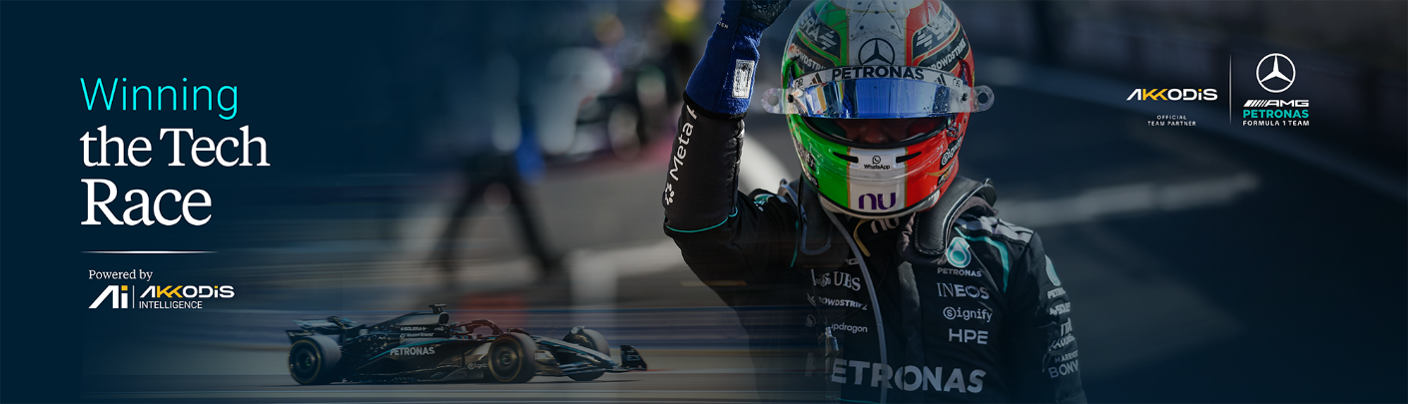
Akkodis has deployed a multilingual artificial intelligence system for the Mercedes-AMG PETRONAS Formula One Team, enabling international guests to access real-time translated team radio, race commentary and event information in their preferred language.
The solution, built on Akkodis’ AI-Core platform, debuted at the Formula 1 Italian Grand Prix in Monza. It processes audio locally at the circuit, combining speech recognition, specialised Formula 1 terminology and AI-powered translation to make race communications more accessible.
The deployment highlights how edge AI is moving beyond conventional enterprise applications into live sporting environments, where speed, accuracy and reliability are essential.
Akkodis multilingual AI brings real-time translation to Formula 1
Following Formula 1 can be challenging for international guests when race commentary, team radio and technical communications are delivered primarily in English.
Akkodis has developed a system that transcribes race communications in real time and translates them into multiple selected languages. The platform currently supports more than 50 languages, allowing guests in the Mercedes-AMG PETRONAS Formula One Team Viewing Gallery to follow the action more easily.
Unlike conventional translation systems that may depend on remote cloud processing, the solution processes audio directly at the circuit. Akkodis reports end-to-end transcription latency of less than 50 milliseconds, helping the system respond quickly to the rapidly changing environment of a Formula 1 race.
The platform is also designed to recognise specialist vocabulary, including driver names, team personnel, circuit locations and racing terminology.
Akkodis multilingual AI uses edge computing for faster responses
A central feature of the system is its use of edge computing, which brings AI processing closer to where information is generated.
In a Formula 1 environment, communications change rapidly and delays can affect how useful a translation is to someone following the race. Processing audio locally helps reduce reliance on remote infrastructure and supports responsive transcription and translation.
Akkodis engineers also developed custom hardware for the deployment. The compact computing platform delivers more than 4,000 trillion operations per second, or TOPS, of AI processing performance within a power target below 600 watts.
The enclosure, mounting architecture, ventilation and cooling systems were engineered for the demanding conditions around an F1 garage, where high temperatures and limited airflow can challenge computing equipment.
According to the company, the system operated continuously throughout race week without interruption.
Akkodis multilingual AI recognises Formula 1 terminology
General-purpose speech recognition can struggle with technical vocabulary, names and specialised expressions. In motorsport, these challenges are amplified by fast-paced radio communications and the need to distinguish between drivers, engineers, teams and track locations.
Akkodis addresses this through domain-specific speech-to-text models and a dedicated language model for translation. The system is designed to identify Formula 1 terminology during transcription before translating the information into the user’s selected language.
A dedicated Terminology Manager allows race-specific vocabulary to be updated, validated and incorporated into future model improvements as terminology evolves during the season.
This specialised approach is important because translating individual words accurately is not always enough. The system must also preserve the context of technical communications so that translated information remains useful to listeners.
Akkodis multilingual AI demonstrates the potential of AI-Core
The deployment is powered by AI-Core, Akkodis’ modular AI ecosystem for applications across cloud, hybrid and edge environments.
AI-Core combines AI models, domain expertise, agentic systems and automation capabilities to support applications such as intelligent automation, decision support, testing, validation and real-time data processing.
For the Mercedes-AMG PETRONAS Formula One Team, the technology provides a practical example of how AI can be integrated into a live operational environment rather than remaining confined to software demonstrations or experimental projects.
Akkodis says the project brought together specialists in AI, software engineering, hardware development, systems integration, mechanical design and deployment operations.
The collaboration also illustrates the growing importance of combining software intelligence with purpose-built computing infrastructure to deliver AI services reliably outside traditional data centres.
Akkodis multilingual AI expands accessibility beyond motorsport
Although the system was first deployed in Formula 1, its architecture has potential applications in other environments where information must be processed quickly and communicated across language barriers.
Possible use cases include international conferences, industrial facilities, transportation hubs and other complex operations where employees or visitors need immediate access to specialised information.
Local processing can be particularly valuable in settings where network connectivity, response time or operational continuity is a concern. Domain-specific language models can also help adapt translation systems to the terminology used in individual industries.
The technology’s effectiveness in other environments will depend on the audio conditions, vocabulary requirements, deployment costs and the accuracy expected for each application.
Akkodis multilingual AI highlights the rise of intelligent edge systems
The Formula 1 deployment reflects a broader shift toward intelligent systems that process information closer to the point of use.
As AI adoption expands, organisations are exploring ways to reduce latency, improve responsiveness and maintain greater control over where data is processed. Edge AI can support these goals by combining local computing power with specialised models and purpose-built hardware.
For Akkodis, the project demonstrates how digital engineering can bring together AI software, hardware design and real-world integration. For the Mercedes-AMG PETRONAS Formula One Team, it offers international guests a more accessible way to experience race communications.
The longer-term significance lies in the wider applicability of this approach. As organisations seek faster and more context-aware AI systems, edge-based intelligence could become increasingly important in environments where timing, reliability and specialised knowledge matter.