
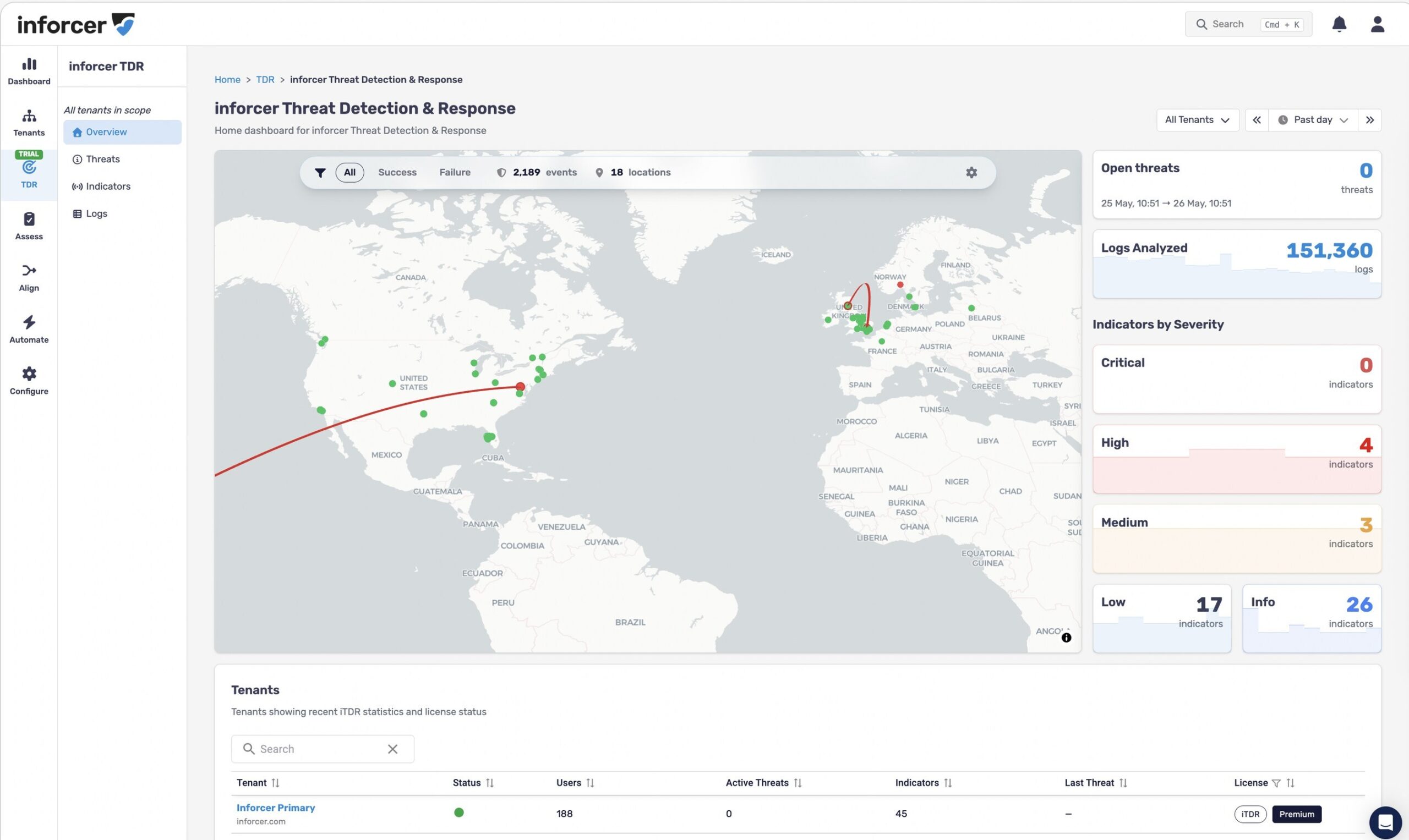
Inforcer Threat Detection and Response Unifies Proactive and Reactive Cybersecurity Operations
The launch of Inforcer Threat Detection and Response highlights a growing shift within the cybersecurity industry as organizations increasingly seek unified platforms capable of managing both proactive security measures and post-incident response from a single operational framework.
Inforcer has announced Inforcer Threat Detection and Response, a new solution designed to help managed service providers and IT teams bridge the gap between preventative security management and incident response activities. The platform aims to unify what security professionals often describe as “left of boom” and “right of boom” cybersecurity operations, creating a more comprehensive approach to threat management.
The announcement comes as businesses face an increasingly complex threat landscape characterized by ransomware attacks, identity-based threats, phishing campaigns and sophisticated cybercriminal operations. Industry experts believe integrated security platforms will become increasingly important as organizations look to reduce complexity while improving threat visibility and response times.
Inforcer Threat Detection and Response Addresses Growing Cybersecurity Complexity
A key objective of Inforcer Threat Detection and Response is to simplify security operations for organizations managing multiple security tools and workflows.
Many businesses currently rely on separate solutions for prevention, monitoring, detection and response activities. This fragmented approach can create operational inefficiencies and delay incident response efforts when threats emerge.
The introduction of Inforcer Threat Detection and Response reflects a broader industry trend toward platform consolidation, where organizations seek centralized visibility across security environments.
Industry analysts note that reducing tool sprawl has become a major priority for security teams facing increasing pressure to manage larger attack surfaces with limited resources.
The ability to integrate preventative controls and incident response capabilities can help organizations improve operational efficiency while strengthening overall security posture.
Inforcer Threat Detection and Response Supports Managed Service Providers
The launch of Inforcer Threat Detection and Response is particularly relevant for managed service providers (MSPs) that oversee cybersecurity operations across multiple customer environments.
MSPs continue playing an increasingly important role in helping small and medium-sized businesses access enterprise-grade security capabilities without building large internal security teams.
However, managing multiple clients often requires streamlined workflows and centralized management capabilities.
The new platform aims to support these requirements by providing a unified framework for threat detection, incident response and security management activities.
Industry observers believe demand for managed security services will continue growing as cyber threats become more sophisticated and regulatory requirements increase across industries.
Inforcer Threat Detection and Response Reflects Shift Toward Unified Security Platforms
The introduction of Inforcer Threat Detection and Response aligns with a broader movement toward unified cybersecurity platforms.
Organizations increasingly prefer integrated ecosystems that combine threat detection, endpoint protection, identity security, monitoring and response functions within a single operational environment.
This approach can help reduce complexity while improving collaboration between security teams.
As cyberattacks become faster and more automated, organizations are under pressure to detect and respond to threats more quickly than ever before.
Industry experts believe unified security platforms can improve visibility and decision-making by providing a consolidated view of potential threats across digital environments.
The demand for streamlined security operations is expected to accelerate as businesses continue expanding cloud adoption and hybrid work initiatives.
Inforcer Threat Detection and Response Enhances Incident Response Readiness
A major benefit of Inforcer Threat Detection and Response is its focus on incident response preparedness.
While prevention remains a critical cybersecurity objective, security leaders increasingly recognize that no organization is immune to cyber threats. As a result, effective detection and response capabilities have become essential components of modern security strategies.
The ability to identify suspicious activity quickly and coordinate response efforts efficiently can significantly reduce the impact of security incidents.
Industry analysts note that response speed often plays a critical role in determining the financial and operational consequences of cyberattacks.
By integrating preventative and reactive security capabilities, organizations can potentially improve resilience against evolving threats.
Inforcer Threat Detection and Response Signals Future of Security Operations
The launch of Inforcer Threat Detection and Response underscores how cybersecurity operations are evolving toward more integrated and intelligence-driven models.
Security teams increasingly require platforms capable of delivering visibility, automation and response capabilities through a unified experience rather than relying on disconnected technologies.
As cyber threats continue growing in frequency and sophistication, organizations are expected to prioritize solutions that simplify security management while improving threat detection and incident response outcomes.
The Inforcer Threat Detection and Response platform reflects this industry direction by bringing preventative security controls and response functions together within a single framework.
With cybersecurity remaining one of the most important priorities for businesses worldwide, unified security management solutions are likely to play a central role in the next generation of cyber defense strategies.