Huawei Luterra S2 Combines Solar Storage and AI to Transform Home Energy Management
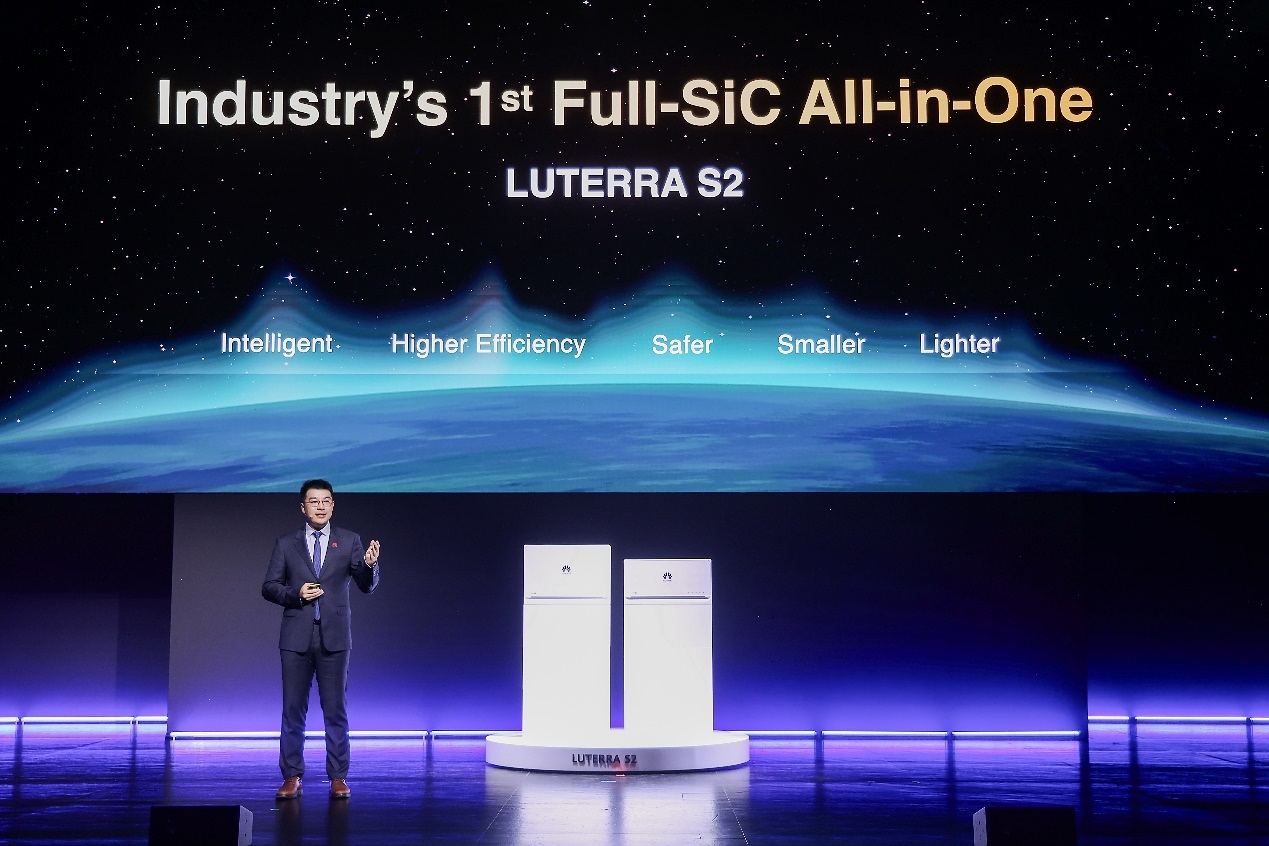
Huawei Luterra S2 is a new all-in-one residential energy system that brings together a hybrid inverter, battery storage and AI-powered energy management in a single stackable solution. Launched in Palma, Spain, on November 9, 2026, the system is designed to help homeowners coordinate rooftop solar generation, electricity storage, EV charging and household energy consumption through an integrated platform.
The system is available in single-phase configurations ranging from 3 kW to 10 kW and three-phase models from 5 kW to 20 kW. Huawei says its proprietary full silicon carbide (SiC) architecture enables conversion efficiency of up to 99%, while its fanless natural cooling design keeps operating noise below 29 decibels.
The launch comes as residential energy systems evolve beyond standalone solar inverters and battery units. With electric vehicles, heat pumps and distributed energy generation becoming increasingly connected, homeowners are looking for systems that can manage multiple energy sources and consumption requirements together.
Huawei has built the LUTERRA S2 around three areas – user experience, intelligent energy management and safety – positioning it as a unified platform for residential energy infrastructure.
Huawei Luterra S2 Uses Full-SiC Architecture for Higher Efficiency
One of the main technology features is Huawei’s proprietary full silicon carbide architecture, combined with Active Neutral Point Clamped (ANPC) topology. Silicon carbide power semiconductors can offer advantages in switching efficiency, power density and thermal performance compared with conventional silicon-based components.
Huawei claims the architecture enables the LUTERRA S2 to achieve maximum conversion efficiency of 99%. The company has also incorporated built-in energy optimisers, which it says can deliver up to 5.0 MWh of lifetime usable energy per kWh of installed capacity. The system has a stated design lifespan of more than 15 years.
The product uses a stackable design intended to simplify installation and reduce the space required for residential energy equipment. Huawei also says the system can be installed and commissioned within minutes.
Another notable feature is its natural cooling design, which eliminates the need for external fans. The company claims operating noise remains below 29 dB, an important consideration for residential installations where equipment may be located close to living spaces.
Huawei Luterra S2 Uses AI to Coordinate Solar and EV Charging
The system’s AI Energy Management 2.0 platform is designed to coordinate energy generation, storage and consumption using information such as weather forecasts, electricity prices, household loads and battery status.
Rather than managing solar generation and battery storage independently, the platform can coordinate photovoltaic systems, EV chargers, heat pumps and virtual power plants. The objective is to determine when electricity should be generated, stored, consumed or supplied to connected systems.
For example, the platform can use weather forecasts and household consumption patterns to plan how solar energy and stored electricity are used. Electricity pricing information can also help inform decisions about when to charge or discharge batteries, depending on the applicable tariff and system configuration.
Huawei has included an AI Assistant that allows homeowners to interact with the energy management system through conversational commands. This is intended to make energy planning and monitoring easier for users who may not be familiar with the technical details of solar generation and battery operation.
The company is also extending AI capabilities to installers. Its AI-powered 3D modelling tools can identify roof structures and installation environments to assist with system planning. AI-based diagnostics and remote support are intended to improve maintenance and troubleshooting.
Huawei Luterra S2 Offers Expandable Storage and Backup Power
The platform is designed to scale according to household energy requirements. Huawei’s technical specifications state that up to three inverters can operate in parallel, supporting a combined capacity of up to 60 kW when using three 20 kW units.
On the storage side, the system supports up to 48 battery packs connected in parallel, with a maximum stated capacity of 336 kWh. This gives installers flexibility to configure systems for different energy requirements, although actual configurations will depend on the selected inverter and battery models.
Backup power is another important part of the design. Huawei specifies a switchover time of less than 10 milliseconds and support for off-grid loads of up to 20 kW.
The system also supports connectivity standards including EEBUS, SG-Ready, OCPP and Modbus TCP. These interfaces are relevant to integrating energy storage with compatible EV chargers, heat pumps and other connected equipment.
The combination of expandable storage and connected energy management reflects a broader shift towards residential systems that can coordinate multiple technologies rather than operate as isolated products.
Huawei Luterra S2 Focuses on Battery and System-Level Safety
Battery safety is a major consideration in residential energy storage, particularly as installations become larger and more closely integrated with homes.
Huawei says the LUTERRA S2 incorporates independent protective isolation structures at the battery-cell level, alongside a localised non-propagation design intended to contain thermal risks.
The system also includes an intelligent smoke-duct design for directional pressure relief, smoke evacuation and cooling. Continuous temperature monitoring of AC and DC terminals is designed to detect overheating at critical electrical connections.
According to Huawei, the system has undergone TÜV Rheinland safety testing, including a cell thermal runaway test, a 20-minute fire test at 1,000°C and a 20% hydrogen explosion test. It has also undergone UL 9540A validation and meets relevant requirements under the EU Battery Regulation. The company states that the system complies with IEC 63027 requirements for arc-fault circuit interruption and has received TÜV Rheinland’s highest-level Safety Mark certification.
These are manufacturer-reported testing and certification details. Actual safety performance also depends on correct installation, system configuration, maintenance and compliance with local electrical regulations.
Huawei Luterra S2 Reflects the Shift Towards Integrated Home Energy
The launch highlights how residential energy technology is moving towards integrated systems that connect solar generation, battery storage, electric mobility and household energy management.
For homeowners, the potential benefit lies in managing electricity as a connected resource rather than treating solar panels, batteries and EV chargers as separate installations. Intelligent scheduling could help improve the use of self-generated electricity and coordinate consumption with changing energy prices.
Huawei previously indicated that the LUTERRA S2 would launch in Europe in November 2026, followed by the Asia-Pacific region in December. The company has not announced pricing in the launch information.
The system’s adoption will depend on regional availability, installer networks, electricity tariffs, local regulations and the economics of residential solar and storage.
As more households explore energy independence and electrification, products such as the LUTERRA S2 point towards a future in which home energy systems are not just designed to store electricity, but also to decide how and when it should be used.