Physical AI Unmanned Vehicle Applications Gain Momentum at COMPUTEX 2026
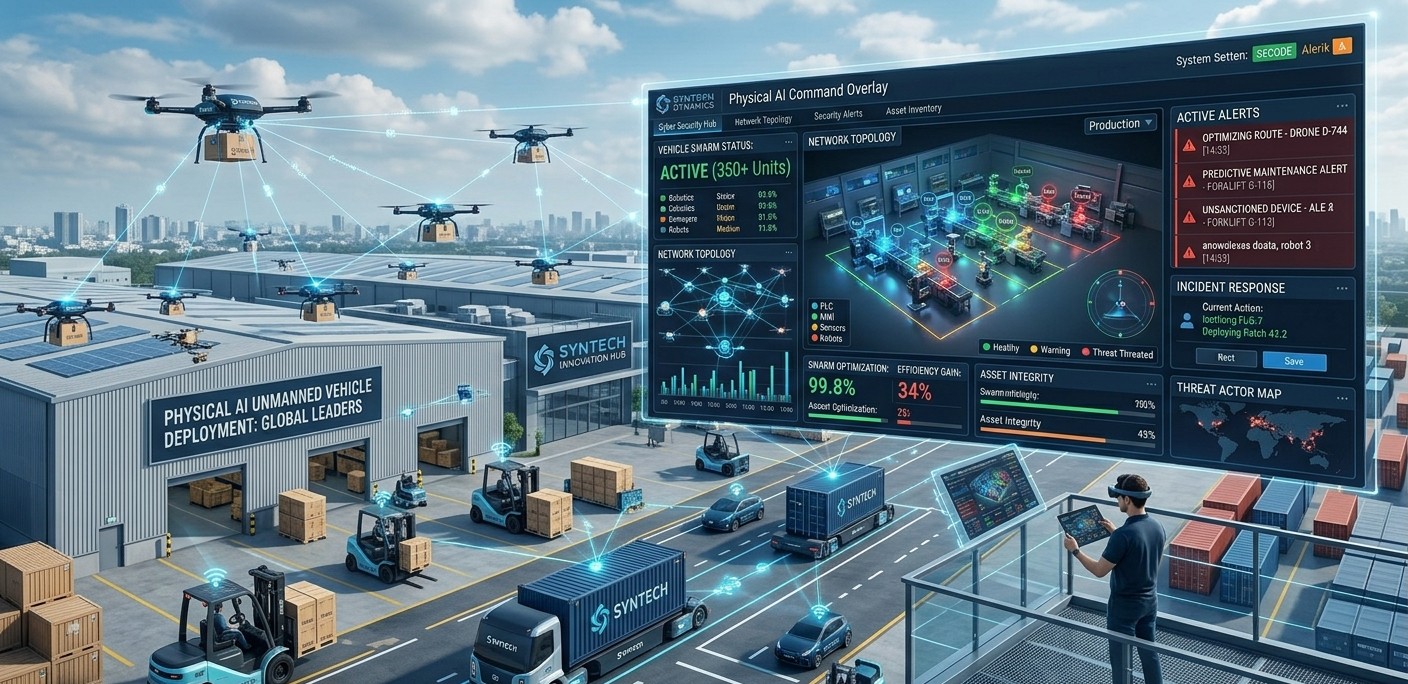
Physical AI unmanned vehicle applications emerged as one of the major highlights at COMPUTEX 2026 as Taiwanese technology companies Otobrite and Turing Drive showcased advanced autonomous mobility technologies designed to accelerate the future of AI-powered transportation and intelligent unmanned systems.
The companies demonstrated how physical AI unmanned vehicle applications are rapidly evolving beyond experimental concepts into practical real-world solutions capable of supporting autonomous driving, industrial transportation, logistics automation, smart mobility infrastructure, and intelligent vehicle coordination systems.
The showcase focused heavily on the integration of artificial intelligence, edge computing, advanced sensing systems, and real-time decision-making technologies that allow autonomous vehicles to interact dynamically with complex physical environments.
Otobrite, known for its automotive vision and advanced driver assistance technologies, partnered with autonomous driving technology company Turing Drive to present intelligent mobility systems capable of enabling safer, more adaptive, and more efficient unmanned transportation operations.
The growing industry focus on physical AI unmanned vehicle applications reflects the next major phase of artificial intelligence development where AI systems are increasingly being integrated into real-world physical environments rather than remaining limited to software-only applications.
Industry experts believe physical AI will become one of the most transformative areas of artificial intelligence over the next decade as autonomous systems continue expanding across transportation, robotics, industrial automation, smart cities, logistics, agriculture, and manufacturing sectors.
At COMPUTEX 2026, the companies highlighted how intelligent perception systems, sensor fusion technologies, and AI-powered navigation platforms are helping autonomous vehicles process environmental conditions more accurately while improving operational safety and decision-making capabilities.
The demonstration also showcased how edge AI infrastructure is becoming critical for physical AI unmanned vehicle applications by enabling real-time data processing directly within vehicles without depending entirely on cloud-based computing systems.
Low-latency edge computing plays an increasingly important role in autonomous mobility environments where vehicles must instantly respond to traffic conditions, road hazards, pedestrians, weather conditions, and constantly changing operational scenarios.
According to the companies, modern autonomous mobility systems require a combination of high-performance AI processors, advanced computer vision technologies, smart sensing platforms, and continuous environmental analysis to deliver reliable real-world operational performance.
The rapid expansion of physical AI unmanned vehicle applications is also being driven by growing investments from governments, automotive manufacturers, logistics providers, and technology companies seeking to modernize transportation systems and improve operational efficiency.
Global investments in autonomous transportation technologies have accelerated significantly in recent years amid growing interest in electric vehicles, robotics, AI infrastructure, smart city development, and intelligent mobility ecosystems.
Industry analysts expect the global autonomous mobility and smart transportation market to witness strong long-term growth as artificial intelligence technologies become increasingly capable of supporting real-world physical operations at scale.
The showcase at COMPUTEX 2026 further highlighted how Asia continues emerging as a major innovation hub for autonomous driving technologies, robotics infrastructure, semiconductor development, and edge AI deployment.
COMPUTEX 2026 featured several major announcements around artificial intelligence, robotics, AI infrastructure, autonomous systems, semiconductor technologies, and next-generation computing platforms as companies increasingly shift focus toward real-world AI deployment opportunities.
The event also demonstrated how physical AI unmanned vehicle applications are becoming central to the future of intelligent transportation systems as technology providers race to develop safer, smarter, and more scalable autonomous mobility solutions.
Otobrite and Turing Drive said their collaboration aims to accelerate the adoption of intelligent unmanned mobility platforms capable of supporting future transportation ecosystems while improving operational reliability, mobility intelligence, and real-time autonomous decision-making performance.
As competition intensifies within the global autonomous vehicle sector, physical AI unmanned vehicle applications are expected to play a critical role in shaping the future of transportation, industrial automation, and AI-powered infrastructure development worldwide.