
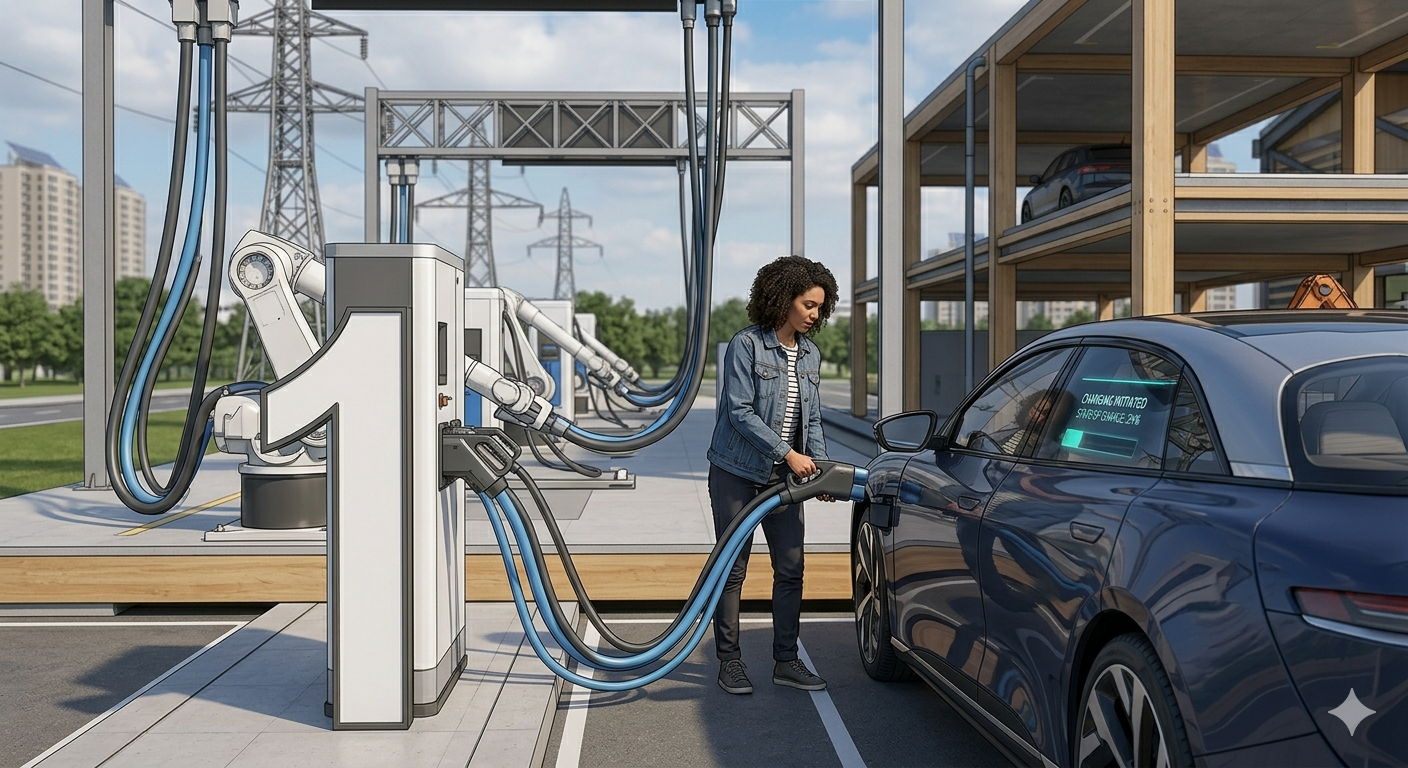
6 EV Charging Infrastructure Trends That Could Transform Electric Mobility in 2026
EV charging infrastructure is expected to witness major expansion in 2026 as governments, automobile companies and technology firms accelerate investments in electric mobility ecosystems worldwide.
The rapid growth of EV charging infrastructure has become one of the most important factors influencing electric vehicle adoption globally. Industry experts believe charging accessibility, faster charging speeds and improved infrastructure networks will play a critical role in shaping the future of transportation.
Automobile manufacturers and energy companies are increasingly investing in EV charging infrastructure as competition intensifies within the global electric vehicle market.
1. Fast Charging Networks Could Expand Rapidly
One of the biggest EV charging infrastructure trends expected in 2026 is the rapid expansion of fast charging networks across highways, urban centers and commercial locations.
Consumers are increasingly demanding shorter charging times and better charging accessibility as electric vehicle adoption continues rising globally.
Industry analysts believe ultra-fast charging systems could significantly improve consumer confidence around EV ownership and long-distance travel.
Readers can also explore our coverage on <a href=”/tesla-india-expansion/”>Tesla India expansion</a> to understand how electric vehicle companies are strengthening mobility ecosystems globally.
2. Governments Are Increasing EV Charging Infrastructure Investments
Governments worldwide are introducing policies and incentive programs aimed at accelerating EV charging infrastructure development.
Several countries are investing heavily in public charging stations, clean energy projects and smart mobility initiatives to support long-term electric transportation goals.
The growing focus on sustainability and emissions reduction is also driving large-scale infrastructure investments across the automotive sector.
3. Smart Charging Technology Could Become Mainstream
Smart charging systems are emerging as another important trend shaping EV charging infrastructure development.
These systems use software, artificial intelligence and grid management technologies to optimize energy consumption, charging schedules and electricity distribution.
Industry experts believe smart charging could help reduce grid pressure while improving energy efficiency across electric mobility networks.
According to International Energy Agency, global electric vehicle adoption is expected to continue growing strongly over the next decade alongside charging infrastructure expansion.
4. Private Companies Are Entering EV Charging Infrastructure Market
Technology firms, oil companies and startups are increasingly entering the EV charging infrastructure market as electric mobility adoption accelerates.
The sector is attracting significant investments due to growing demand for charging stations, energy storage systems and connected mobility services.
Industry analysts believe EV charging infrastructure could become one of the fastest-growing segments within the global clean energy economy.
5. Wireless Charging Technology Could Gain Attention
Wireless charging systems are also being explored as a future innovation within EV charging infrastructure development.
Several companies are researching technologies capable of charging electric vehicles without physical cables using electromagnetic systems and automated charging platforms.
While still developing, wireless charging could eventually improve convenience and user experience for EV owners.
6. EV Charging Infrastructure Could Shape Future Urban Mobility
The expansion of EV charging infrastructure is expected to significantly influence urban planning, transportation systems and sustainable mobility strategies globally.
Cities are increasingly integrating electric mobility solutions into smart city projects aimed at reducing emissions and improving transportation efficiency.
Industry experts believe widespread charging infrastructure availability will be essential for supporting the long-term transition toward electric transportation.
FAQs
Why is EV charging infrastructure important?
EV charging infrastructure is critical because it supports electric vehicle adoption and improves charging accessibility for consumers.
What are fast charging stations?
Fast charging stations are high-speed EV chargers designed to recharge electric vehicles significantly faster than traditional charging systems.
Could EV charging infrastructure grow rapidly in 2026?
Industry analysts expect EV charging infrastructure investments to increase significantly as electric mobility adoption accelerates globally.
EV Charging Infrastructure Expected to Remain Major Industry Focus
Analysts believe EV charging infrastructure will remain one of the most important growth areas within the global automotive and clean energy industries.
The continued expansion of charging networks is expected to influence electric vehicle adoption, sustainability initiatives and future transportation systems worldwide.
As electric mobility continues evolving globally, EV charging infrastructure is expected to remain under strong focus among governments, businesses and consumers throughout 2026 and beyond.