
Cellid AR Glasses Reference Design Featured at Computer History Museum
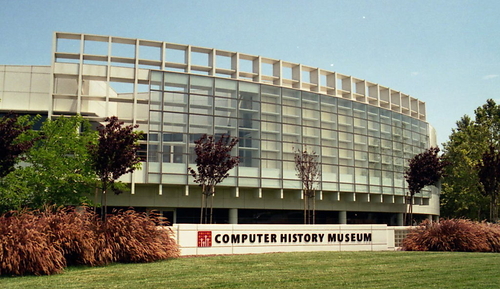
Cellid’s augmented reality (AR) glasses reference design is being showcased at the Computer History Museum in Mountain View, California, as part of an exhibition exploring the evolution of extended reality and wearable computing. The display highlights the Japanese technology company’s work on lightweight eyewear that overlays digital information onto the user’s view of the physical world.
The exhibition, titled Extended Reality: Visions of the Future, opened on October 1, 2026, and runs through March 28, 2027. It brings together more than 100 devices and artefacts spanning six decades of virtual reality, augmented reality, mixed reality and smart-glasses development.
Alongside its AR glasses reference design, Cellid has contributed disassembled components of its HJ1 AI Smart Glasses. The inclusion places the company’s technology among a broader collection tracing how wearable computing has evolved from experimental headsets to devices designed for more everyday use.
Cellid AR Glasses Showcase Lightweight Waveguide Technology
A central element of Cellid’s reference design is its proprietary waveguide technology. Waveguides are optical components that direct projected light through a lens so that digital images can appear within the wearer’s field of view while the surrounding environment remains visible.
Unlike conventional virtual reality headsets, which typically place a display in front of the eyes and largely isolate the wearer from the physical environment, optical see-through AR glasses are designed to combine digital information with real-world vision.
Cellid develops waveguides and display modules intended to make this experience possible in eyewear that resembles ordinary glasses. The company’s reference design demonstrates how these optical components can be incorporated into a lightweight form factor, an important consideration for devices intended to be worn for extended periods.
The approach also reflects a broader challenge in AR hardware development: balancing display visibility, image quality, size, weight, power consumption and comfort. Progress in these areas could influence whether smart glasses become practical for regular use beyond specialised industrial and professional environments.
Cellid AR Glasses Bring Digital Information Into Everyday Vision
The objective of optical AR glasses is to make digital information available without requiring users to look down at a smartphone or turn towards a separate screen.
Depending on the device and its software, potential applications include navigation prompts, information searches, instructions and contextual information related to objects in the user’s surroundings. Cellid’s AR glasses development ecosystem includes an SDK designed to support applications involving image display, object recognition and generative AI.
These capabilities could support hands-free scenarios in which users need information while continuing to interact with their physical environment. For example, an application could display relevant instructions while a person works with equipment or present contextual information during a task.
However, the practical experience depends on more than the optical system. Cameras, sensors, processing hardware, software and user-interface design all influence how effectively a pair of glasses can recognise surroundings and present useful information.
The reference design is therefore significant as a demonstration of how display technology can fit into a wider wearable computing system, rather than as evidence that every potential application is already commercially available.
Cellid AR Glasses Feature in a Wider History of Extended Reality
The Computer History Museum’s exhibition places current AR and smart-glasses development within a much longer history of attempts to make computing more immersive and accessible.
The collection includes early head-mounted display experiments, historical virtual reality systems, Google Glass prototypes, Nintendo’s Virtual Boy, Apple Vision Pro and Ray-Ban Meta smart glasses, among other devices.
By presenting technologies from different generations together, the exhibition illustrates how approaches to wearable computing have changed over time. Early systems often prioritised research, specialised applications or immersive experiences, while newer devices increasingly explore lighter designs, everyday usability and AI-assisted interaction.
Cellid’s reference design represents the optical hardware side of this evolution. Its waveguide approach aims to deliver digital visuals through glasses-style lenses, addressing one of the engineering challenges involved in moving AR away from bulky head-mounted systems.
The exhibition also examines how artificial intelligence, computer vision and natural-language interaction are expanding the capabilities of wearable devices. These technologies could allow future systems to interpret information from the environment and provide more context-aware assistance.
Cellid AR Glasses Reflect the Convergence of AI and Wearables
The growing connection between AI and wearable computing is changing expectations for smart glasses. Rather than serving only as miniature displays, newer devices are increasingly being developed to help users access information, interact with digital assistants and understand their surroundings.
Cellid’s development work spans optical display hardware and spatial recognition technology. Its reference design and HJ1 AI Smart Glasses components at the exhibition demonstrate the company’s participation in this broader shift towards wearable systems that combine physical and digital information.
For these devices to become more useful in daily life, manufacturers must address several challenges, including comfort, battery life, display visibility, privacy, software compatibility and the reliability of AI-generated information.
The optical display remains a foundational component because it determines how digital content is presented to the wearer. Yet even a lightweight design must be supported by software and interaction methods that make information easy to access without creating unnecessary distractions.
The exhibition offers visitors a way to examine these developments alongside earlier attempts to bring computing into the user’s field of vision.
Cellid AR Glasses Highlight the Future of Wearable Computing
Cellid’s presence at the Computer History Museum provides visibility for its approach to AR optics within an exhibition dedicated to the development of extended reality. The display also places its work in context with technologies from established consumer electronics companies and earlier innovators in the field.
The longer-term opportunity for AR glasses lies in making digital information available in a more natural and convenient way. Achieving that goal will require progress across optics, hardware design, software, AI and the everyday experience of wearing the device.
The exhibition runs until March 28, 2027, giving visitors an opportunity to explore more than 100 historical and contemporary XR devices. For Cellid, the showcase provides a platform to demonstrate its waveguide technology as the industry continues to explore what computing might look like beyond conventional screens.