
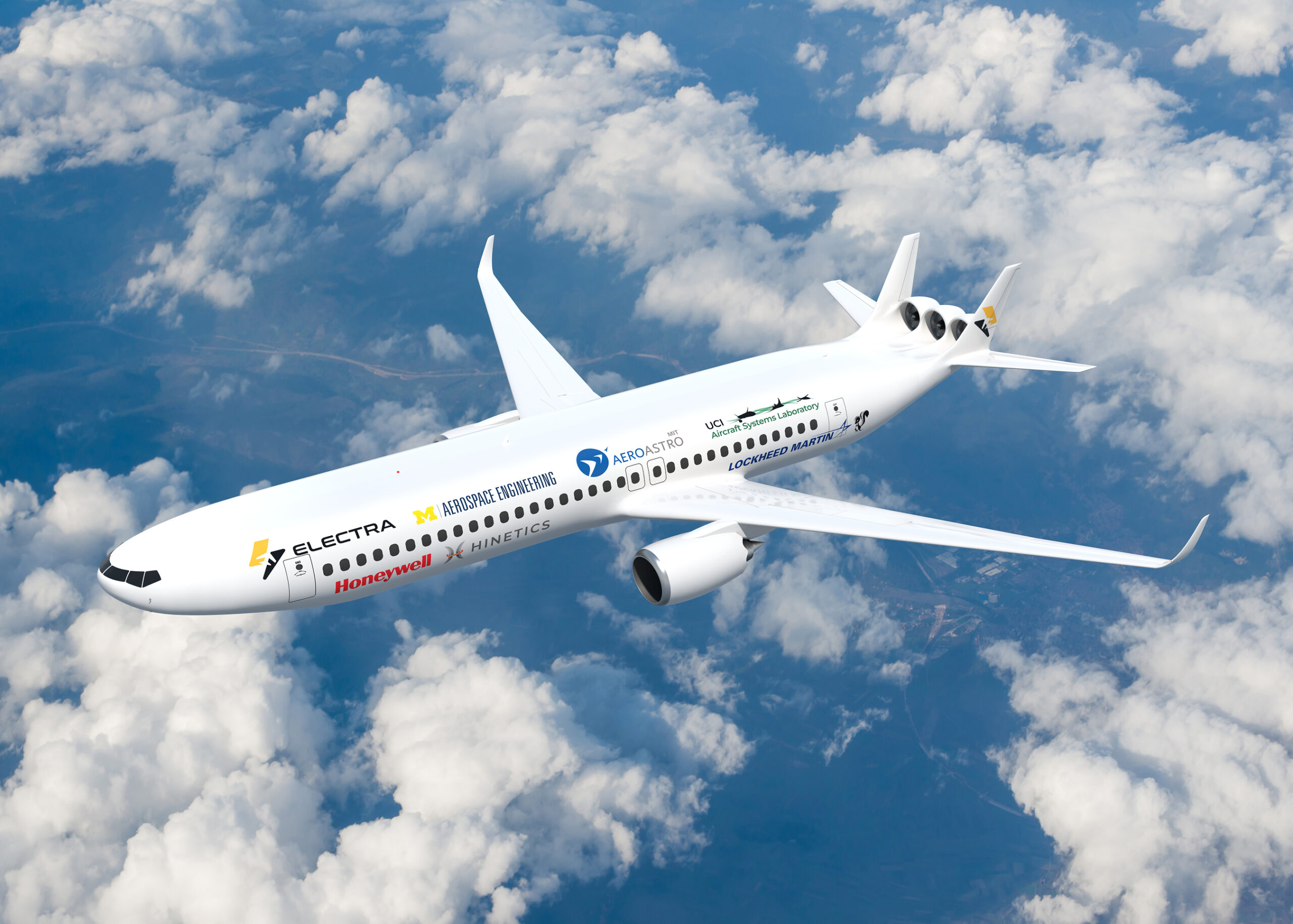
Electra Unveils Turbo Electric Aircraft Concept for Future Sustainable Air Travel
The Electra unveils turbo electric aircraft concept announcement represents a significant step toward the future of commercial aviation as the industry searches for technologies capable of reducing emissions, improving efficiency and supporting long-term sustainability goals.
Electra has unveiled a new turbo-electric aircraft concept developed as part of NASA’s Advanced Aircraft Concepts for Environmental Sustainability (AACES) 2050 program. The concept explores how electrification, advanced aerodynamics and integrated propulsion systems could transform commercial aircraft carrying more than 100 passengers by the middle of the century. The study focuses on improving aircraft efficiency while maintaining the performance and economics required by commercial airlines.
The unveiling comes at a time when the aviation sector faces increasing pressure to reduce carbon emissions and meet ambitious sustainability targets. Governments, airlines and aircraft manufacturers are investing heavily in next-generation propulsion technologies as they seek alternatives to conventional aircraft designs.
Electra Unveils Turbo Electric Aircraft Concept Through NASA AACES 2050 Program
A major driver behind Electra unveils turbo electric aircraft concept is NASA’s Advanced Aircraft Concepts for Environmental Sustainability (AACES) 2050 initiative.
The NASA program was created to explore transformative aircraft technologies capable of significantly reducing aviation’s environmental impact by 2050. Through the initiative, NASA is working with industry and academic partners to evaluate new aircraft architectures, propulsion systems and sustainability strategies that could shape the future of commercial aviation.
Electra’s study examines how targeted electrification and innovative aircraft design could deliver substantial improvements beyond those expected from conventional advances in engines and aerodynamics alone.
Industry analysts view programs such as AACES 2050 as critical because many of the technologies needed to decarbonize aviation will require decades of development before reaching commercial service.
Electra Unveils Turbo Electric Aircraft Concept With Innovative Double-Bubble Design
One of the most distinctive features behind Electra unveils turbo electric aircraft concept is the use of a double-bubble lifting fuselage.
Unlike traditional tube-and-wing airliners, the concept uses a wider fuselage design that contributes to lift generation during flight. According to Electra, this configuration improves aerodynamic efficiency while creating opportunities for more integrated propulsion systems.
The aircraft concept also incorporates underwing turbofan engines that generate electricity for electrically driven tail-mounted fans. These fans utilize a technology known as boundary layer ingestion, where slower-moving airflow over the aircraft fuselage is re-energized to recover energy that would otherwise be lost.
This integrated approach reflects a growing industry trend toward combining multiple technologies to achieve meaningful efficiency gains rather than relying on a single breakthrough innovation.
Electra Unveils Turbo Electric Aircraft Concept to Improve Aircraft Efficiency
The announcement that Electra unveils turbo electric aircraft concept centers heavily on efficiency improvements.
Electra’s analysis suggests the design could deliver up to 17% additional efficiency improvements beyond gains expected from future advances in structures, engine technology and aerodynamics by 2050.
For airlines, efficiency remains one of the most important factors influencing aircraft economics. Fuel costs represent a major portion of airline operating expenses, making improvements in fuel consumption directly linked to profitability and sustainability.
Industry experts believe hybrid-electric and turbo-electric systems could play an important role in reducing emissions while maintaining the range and payload capabilities required for commercial aviation.
As airlines pursue net-zero commitments, technologies that improve operational efficiency are expected to attract growing interest from manufacturers and regulators alike.
Electra Unveils Turbo Electric Aircraft Concept Amid Aviation Sustainability Push
The Electra unveils turbo electric aircraft concept announcement arrives during a period of rapid innovation across sustainable aviation.
Aircraft manufacturers, startups and research organizations are exploring a wide range of technologies including hybrid-electric propulsion, hydrogen-powered aircraft, sustainable aviation fuels and advanced airframe architectures.
Electra itself has been actively developing hybrid-electric aircraft technologies, including its Ultra Short aircraft program aimed at regional air mobility applications. The company’s broader vision includes applying electrification expertise to larger commercial aviation platforms over the long term.
Industry observers note that no single technology is expected to solve aviation’s sustainability challenges. Instead, future aircraft are likely to combine multiple innovations across propulsion, aerodynamics and operations.
Electra Unveils Turbo Electric Aircraft Concept Signals Future of Airliner Design
The fact that Electra unveils turbo electric aircraft concept underscores how the future of aviation may look dramatically different from today’s commercial aircraft.
Rather than incremental improvements to existing designs, researchers are increasingly exploring entirely new configurations capable of delivering transformative gains in efficiency and environmental performance.
Programs such as NASA’s AACES 2050 initiative are helping identify which technologies may be viable for future generations of aircraft. While the Electra concept remains a research study rather than a production aircraft, it provides valuable insight into how electrification and integrated design could influence future airliners.
As the aviation industry works toward its long-term sustainability goals, concepts such as the one unveiled by Electra are likely to play an important role in shaping the next era of commercial air travel and advancing the transition toward lower-emission aviation systems.